

Vulvar Lichen Sclerosus Treatment
Vulvar Lichen Sclerosus Treatment in Ireland
Specialist gynaecological care in Cork for women with vulvar lichen sclerosus
Dr Ana Belén Rizo provides specialist gynaecological care for women with vulvar lichen sclerosus in Cork, Ireland. With extensive experience in vulvar health, she provides diagnosis, long-term management and personalised treatment for women experiencing itching, burning, vulvar skin changes, pain or discomfort during sex.
What is vulvar lichen sclerosus?
Vulvar lichen sclerosus is a chronic, progressive inflammatory condition that affects the skin of the vulva and may also involve the perianal area. Less commonly, it can affect other areas of the body.
It has traditionally been described more often in life stages where oestrogen levels are lower (such as menopause and childhood). However, it can also occur in women of reproductive age.
Prevalence is likely underestimated. Some studies suggest it affects a meaningful proportion of women and girls, which is why early recognition is important.
Lichen sclerosus is associated with an increased risk of vulvar cancer, which is why timely diagnosis, appropriate treatment and regular follow-up are essential. Reported risk varies across studies and depends on long-term control and monitoring.
Why does vulvar lichen sclerosus occur?
Several genetic and immunological mechanisms appear to be involved in lichen sclerosus. Autoimmune processes are thought to play an important role in many cases.
First-line treatment for vulvar lichen sclerosus
First-line treatment typically involves high-potency topical corticosteroids prescribed in a structured regimen (an induction phase followed by maintenance). One of the most commonly used options is clobetasol propionate 0.05%, when clinically indicated.
The goal is not only symptom relief, but also long-term skin protection and reducing flare frequency.
Symptoms and how the condition can progress
The most frequent symptom is vulvar itching, often accompanied by burning, soreness and general discomfort.
Pain during intercourse (dyspareunia) is also common. For this reason, some women experience difficulties with penetrative sex.
Fissures and small vulvar tears are frequent. Urinary discomfort and urinary tract infections may also occur.
If the perianal area is affected, intense itching, anal fissures and pain during bowel movements can appear.
Over time, vulvar skin changes may lead to anatomical changes. The labia minora can become less defined, and scarring may contribute to clitoral hood fusion, which can cause itching, pain and reduced sensitivity.
Symptoms vary widely. Some women may have minimal symptoms but still develop anatomical changes, which is why evaluation and follow-up matter.
An integrative and regenerative approach
Beyond topical therapy, an integrative approach aims to support the underlying inflammatory and immune processes involved.
Nutrition, stress management, regular physical activity and restorative sleep can be important pillars alongside medical treatment.
We also consider balance at a metabolic, hormonal, immunological and emotional level where relevant, tailoring recommendations to each patient.
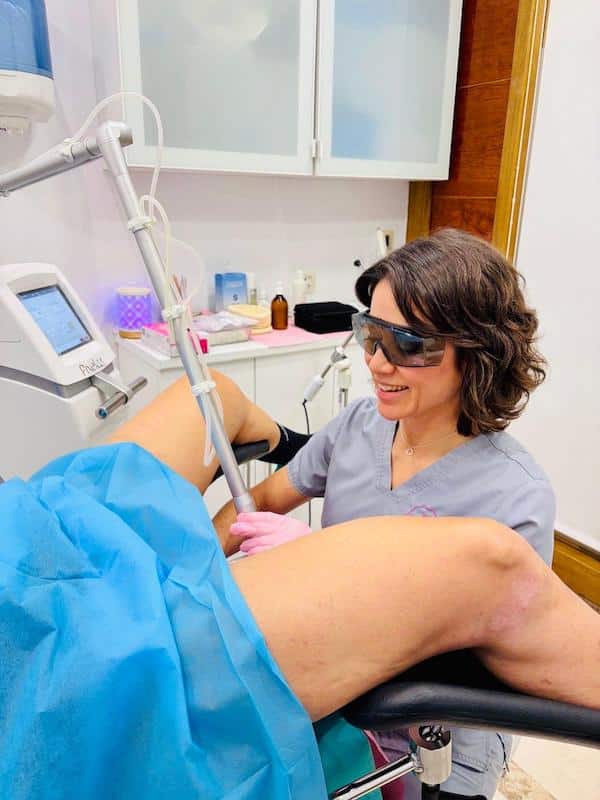
In selected cases, we complement first-line treatment with regenerative therapies, including CO₂ laser and PRP, with the aim of improving symptoms, supporting tissue quality and enhancing comfort over time.
Surgical treatment in vulvar lichen sclerosus
In cases where vulvar anatomy is significantly affected, surgical treatment may be considered. Adhesiolysis can help release fused labia, and clitoral hood release may be appropriate in selected cases.
When surgery is needed, outcomes may improve when combined with a comprehensive treatment plan and supportive therapies.

Book a consultation for lichen sclerosus in Cork
If you are experiencing symptoms of lichen sclerosus, have recently been diagnosed, or feel that your symptoms are not adequately controlled, a specialist assessment can help you understand your condition and establish a personalised long-term treatment plan.
Dr Ana Belen Rizo, gynaecologist in Cork, provides personalised care for women with vulvar lichen sclerosus, with particular attention to symptom control, vulvar health, sexual wellbeing and long-term follow-up.
Frequently asked questions about vulvar lichen sclerosus in Cork (Ireland)
Vulvar lichen sclerosus is a chronic inflammatory skin condition that mainly affects the vulva. It can cause itching, burning, soreness, pain with intercourse, and visible skin changes. With appropriate management and follow-up, symptoms can often be controlled and the skin protected long-term.
Common symptoms include persistent itching (often worse at night), burning, tearing or fissures, discomfort with tight clothing, whitening or thinning of the skin, and pain during sex. If you recognise these symptoms, a clinical assessment is recommended.
There is no definitive cure at present, but treatment can usually control symptoms, reduce flare-ups and help protect the vulvar skin over time. Regular follow-up is important.
Laser and PRP may be considered in selected cases as part of a personalised plan. In our Cork clinic, we may use CO2 gynaecological laser and/or PRP (platelet-rich plasma) to support symptom control and tissue quality when appropriate. Suitability is confirmed after an in-person assessment and review of your medical history.
No. It is not a sexually transmitted infection and it is not spread through skin contact. It does not affect your partner.
It can, especially if symptoms cause discomfort or pain during intercourse. With the right treatment plan and supportive care, many people experience significant improvement.
Lichen sclerosus is associated with a small increased risk of vulvar pre-cancerous changes and vulvar cancer, particularly in long-standing or poorly controlled cases. This is why early diagnosis, good symptom control and regular reviews are important.
Most treatments are well tolerated. Your plan is tailored to your symptoms and comfort, and we can discuss options to minimise discomfort during any in-clinic procedures.
Vulvar lichen sclerosus can be diagnosed by a gynaecologist or dermatologist with experience in vulvar conditions. Diagnosis is usually based on the symptoms and a careful examination of the vulvar skin. In some cases, a vulvar biopsy may be recommended if the diagnosis is uncertain, the appearance is atypical, or a particular area requires further assessment.
A biopsy is not always needed to diagnose vulvar lichen sclerosus. In many cases, the diagnosis can be made based on your symptoms and a careful examination of the vulvar skin. A biopsy may be recommended if the diagnosis is uncertain, the appearance is atypical, the condition does not respond as expected to treatment, or there is a suspicious area that requires further assessment.